Ten days. That’s roughly how long a decent fitness tracker should run between charges, and it’s the single biggest reason we keep recommending them over smartwatches to a good chunk of readers who write in asking what to buy. A smartwatch with a bright always-on screen and a dozen apps running will get you to maybe two days, sometimes less. If what you actually want is something that counts your steps, watches your sleep and buzzes gently when a text comes in, a smartwatch is solving problems you don’t have.
We get asked about this constantly, usually from three kinds of people: parents who want something simple for a teenager without handing them a tiny computer, people recovering from an injury who’ve been told by a physio to watch their daily activity, and folks who tried a smartwatch once and found it exhausting to charge every night. For all three groups, the best fitness trackers on the market right now do less than a smartwatch on purpose, and that’s precisely the point.
What a tracker does that a smartwatch doesn’t
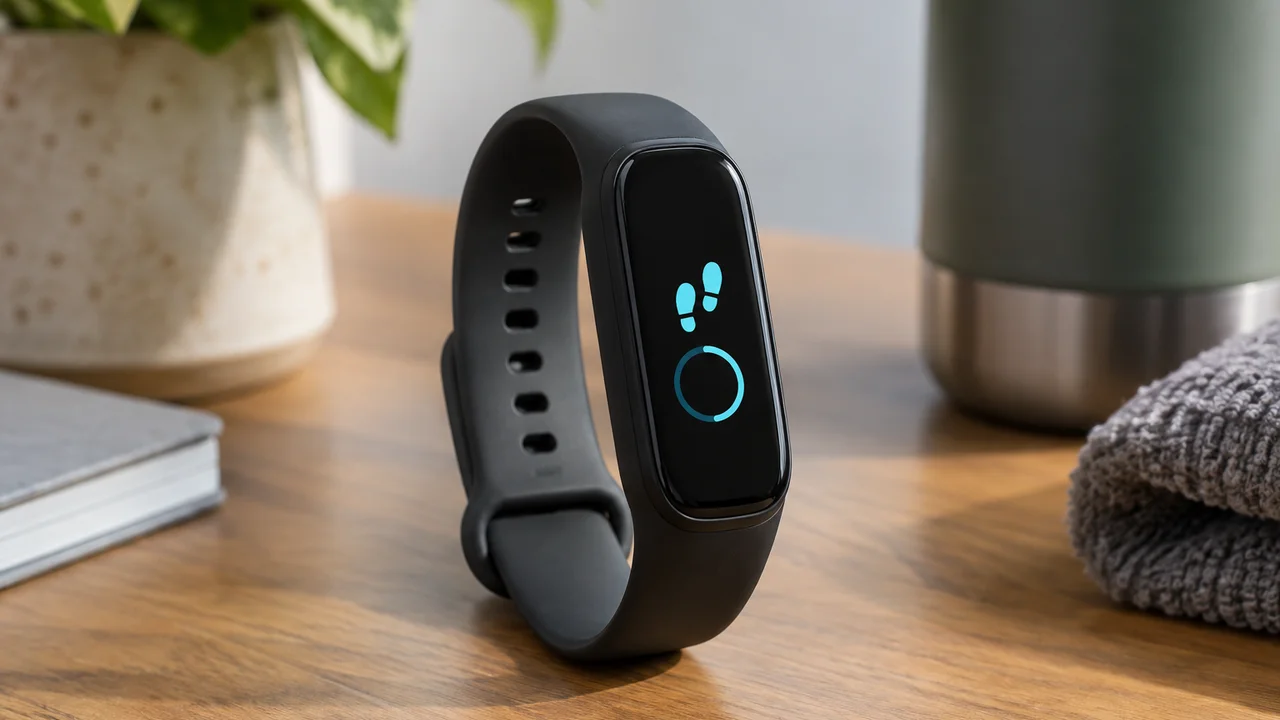
A fitness tracker is, at its core, a smaller, simpler device built around one job: logging your movement, heart rate and sleep accurately enough to be useful, then getting out of the way. No app store, no third-party watch faces, usually no speaker or microphone. The screen is often smaller too, sometimes just a strip rather than a full square face.
That simplicity is a feature, not a limitation. Fewer components draw less power, which is why battery figures on trackers are measured in days rather than hours. It also means less to go wrong. We’ve fielded plenty of emails over the years about smartwatches losing Bluetooth connection, apps crashing mid-run, or software updates breaking a feature that worked fine the week before. Trackers aren’t immune to bugs, but there’s simply less surface area for things to break.
Who actually needs one
Students juggling study and part-time shifts tend to like trackers because they’re cheap enough to not panic over losing one, and sleep tracking genuinely helps when you’re trying to work out why you’re exhausted despite eight hours in bed. Tradies are a different case again: a tracker that survives dust, sweat and the occasional knock against a scaffold pole matters more than a heart rate graph with twelve decimal places of precision. And for older Australians, or anyone managing a chronic condition under a GP’s guidance, a tracker with a simple, legible display and genuinely long battery life beats a smartwatch that needs daily babysitting.
Travellers are the group we feel most strongly about. Our contrarian take, and we’ll die on this hill a little: for most people doing a two to three week overseas trip, a basic tracker beats a smartwatch every time, because you’re not hunting for a charger in an airport lounge or stressing about it dying halfway through a hike. A smartwatch feels like the premium choice on paper. In practice it’s one more thing demanding power in a day already full of flights, foreign SIMs and dead phone batteries.
Battery life is the whole game
We’ve said this before about laptops and we’ll say it again here about wearables: a manufacturer’s battery claim is a lab number, not a promise. Our laptop battery life claims vs reality piece goes into why these figures are tested under best-case conditions, and the same caveat applies to fitness trackers, just with smaller margins for error.
Real-world battery life on a good tracker, with continuous heart rate monitoring and sleep tracking switched on, typically lands somewhere between five and ten days depending on the brand and how often you’re using GPS for outdoor runs or rides. GPS is the big battery drain on any wearable, tracker or smartwatch alike, so if you’re a regular runner who wants route maps, expect shorter stretches between charges than the box promises.
Our advice: treat the advertised figure as a ceiling, not a floor, and if a listing says “up to 14 days” assume something closer to nine or ten in normal use with the screen checked a few times an hour.
Screens and displays worth knowing about
Tracker displays range from a few small LED dots that light up in a pattern through to proper colour touchscreens that look almost like a shrunken smartwatch. The cheaper and more basic the screen, the longer the battery tends to last, which is the trade-off worth sitting with before you buy.
For most people we’d actually suggest going simpler than feels comfortable at first. A monochrome or basic colour display that shows steps, heart rate and the time is enough for 90 percent of what people use a tracker for day to day. The flashier colour touchscreens with animated watch faces chew through battery for a feature most people check for two seconds before putting their wrist back down.
Accuracy, and what the sensors can really tell you
Optical heart rate sensors, the green or red lights on the underside of most trackers, work by measuring blood flow through your skin. They’re generally solid for resting heart rate and steady-state cardio, less reliable during fast, jerky movements like boxing or weights, where the band can shift slightly against the skin. If you want lab-grade accuracy for serious training, a chest strap paired to the tracker is still the gold standard, and several trackers support this pairing via Bluetooth.
Sleep tracking is similarly useful as a trend indicator rather than a precise diagnostic tool. It’ll tell you reliably that last week you slept worse than the week before. It won’t replace a proper sleep study if you genuinely suspect something like sleep apnoea, and we’d always point readers with ongoing concerns toward their GP rather than a graph on their phone. The Sleep Health Foundation, a body the National Health and Medical Research Council recognises for public sleep guidance, has sensible general reading on this if you want a starting point beyond app data, available at sleephealthfoundation.org.au.
Software support and the app problem
This is where we think a lot of buying guides drop the ball. A tracker is only as good as the app it talks to, and that app needs to keep working for years, not months. Before buying, it’s worth checking how long the manufacturer has historically supported older models with app updates, because a tracker that stops syncing properly with a newer phone’s operating system is effectively dead weight on your wrist.
This is the same logic we apply to phones in our Android security updates explained by brand piece: the hardware is only half the story, and the company’s track record on keeping software current matters just as much as what’s printed on the spec sheet. We’d rather recommend a tracker from a brand with five years of consistent app updates behind it than one with a flashier sensor but a patchy update history.
Account requirements are worth checking too. Some trackers demand you create an account and hand over data just to see your own step count, which brings up the same privacy questions we’ve raised before around connected gadgets generally. If that bothers you, it’s worth reading our explainer on is your smart home spying on you before you commit to a particular ecosystem, since some brands are considerably more transparent than others about what they do with your health data. The Office of the Australian Information Commissioner publishes general guidance on health app data handling, worth a read at oaic.gov.au, if you want to understand what a company can legally do with that information once you’ve handed it over.
Durability and day-to-day wear
Water resistance ratings matter more than people expect, especially for anyone who showers with the tracker on or swims laps. Look for a rating that explicitly covers swimming, not just splash resistance, since the two are genuinely different standards and the wording on packaging can blur the line. Strap quality is the other thing that quietly determines how long you’ll actually wear the thing. Silicone straps are fine for most people but can irritate skin over long periods in Australian summer heat and humidity, and the cheaper ones tend to perish and crack within a year or two. If you’re buying for a tradie or anyone working outdoors, a tracker with a swappable strap is worth the small premium, because you can replace a worn band for a few dollars rather than binning the whole unit.
What we’d actually buy right now
We’re deliberately steering clear of naming specific models and prices here, because this category turns over fast and whatever’s on shelves changes within months. What we’d tell a reader standing in an aisle, or scrolling a retailer’s app, is to filter by three things in this order: realistic battery life under continuous use rather than the marketing figure, a manufacturer with a genuine multi-year history of app support, and a swim-rated water resistance if you’re anywhere near a pool or the ocean regularly.
Budget trackers from the major fitness brands generally sit somewhere under $100, with mid-range options with more accurate sensors and better screens running from roughly $150 to $250. Anything above that and you’re paying for features that start to blur into smartwatch territory, like onboard music storage or contactless payments, at which point it’s worth asking honestly whether you actually want a smartwatch after all and just haven’t admitted it yet.
If you’re buying second-hand or refurbished to save money, which we think is a genuinely sensible move for this category given how incremental the yearly updates tend to be, our guide on refurbished phones Australia what to check covers battery health and return policies that apply just as well to a used tracker as a used phone, even though it’s written with phones in mind.
None of this is about trackers being better than smartwatches in some absolute sense. For plenty of people, particularly anyone who relies on contactless payments from their wrist or wants proper third-party apps, a smartwatch is the right call and we’d say so plainly. But for the reader who just wants to know how many steps they did today, how they slept last night, and doesn’t want to think about charging again until next weekend, the humble tracker still does that job better than almost anything with a bigger screen and a louder price tag.
— Priya Raman, Reviews Editor, Tech Geek
Featured image: AI-generated illustration.