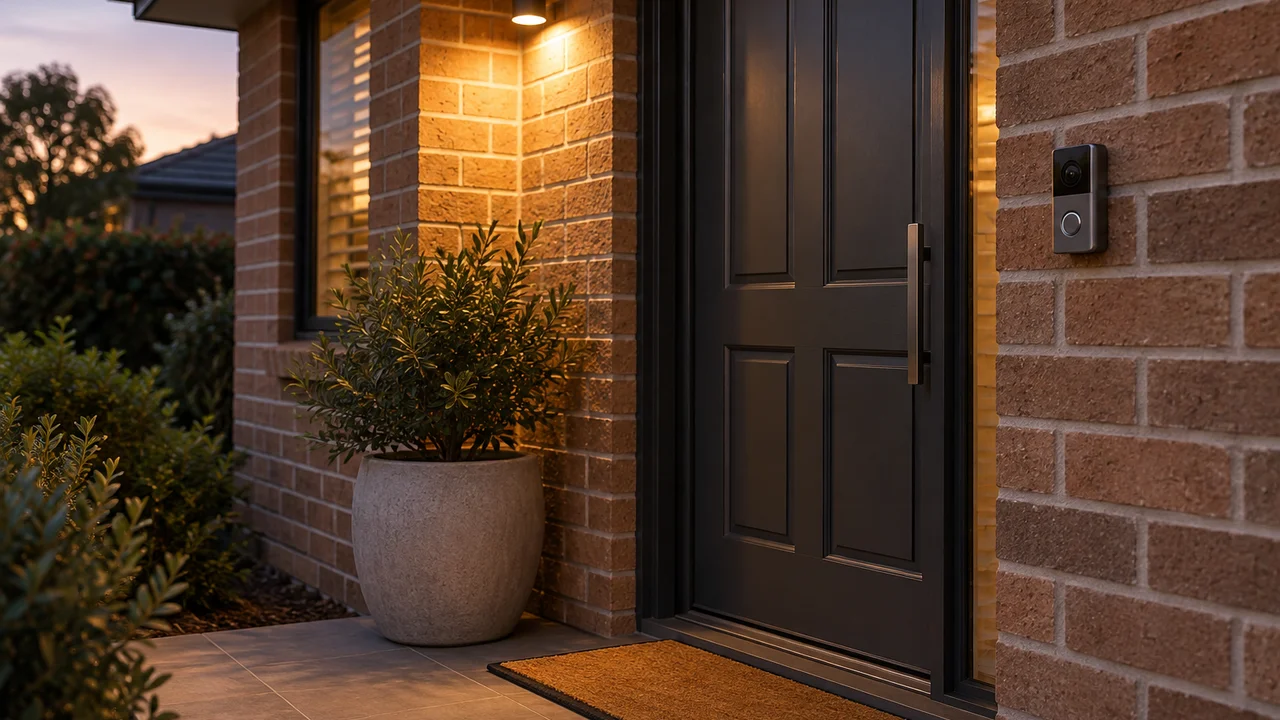
Three different apps to turn off one set of lights. That was the state of play in most Australian homes running a mix of smart plugs, globes and sensors as recently as a couple of years ago. We’d hear from readers who’d bought a cheap sensor light from a hardware aisle, a video doorbell from one brand and a robot vacuum from another, and ended up with three apps, three logins and a Google Home routine that worked about four days out of seven. Matter and Thread were built to fix exactly that mess, and after a couple of years of real households actually using the gear, we can say the fix mostly works. Mostly.
This is the bit that trips people up straight away: Matter and Thread are not the same thing, even though they’re almost always mentioned in the same breath. Matter is the software language, a common set of rules that lets a light bulb from one company talk to a hub from another without either needing a special app. Thread is the radio, a low-power wireless network purpose-built for small devices like sensors and locks, sitting alongside your Wi-Fi rather than replacing it. You can have Matter devices that use Wi-Fi, Matter devices that use Thread, and old-school devices that use neither. Confusing on paper. In the lounge room, if you’ve set it up right, it mostly just works.
What actually changed for households
Before Matter, buying a smart home product meant picking a camp. Apple HomeKit, Google Home, Amazon Alexa, Samsung SmartThings: four different ecosystems, each with its own certified product list, and a real risk that the clever sensor you wanted simply didn’t talk to the hub you already owned. We’ve spoken to enough frustrated readers over the years to know this wasn’t a minor annoyance. It was the single biggest reason ordinary Australians gave up on smart homes altogether after one bad experience with a smart plug that refused to reconnect after an internet dropout.
Matter changes the deal by putting the compatibility requirement on the device, not the ecosystem. A Matter-certified product is supposed to work with Apple’s Home app, Google Home, Amazon Alexa and Samsung SmartThings without needing four separate set-up processes. In our experience testing recent devices from each of the big ecosystems, that promise holds up far better than the old alliance-based systems ever did. You still pick a primary app to live in day to day, but you’re no longer locked into a single manufacturer’s garden for every new gadget you buy, which matters just as much for your phone choice as it does for your light bulbs, something we’ve covered when comparing Pixel vs Galaxy software differences for households split across two phone brands.
Where Thread actually earns its keep
Thread solves a different, narrower problem: battery life and reliability for small sensors. Wi-Fi is a power-hungry radio, which is fine for a television but rough on a door sensor that’s meant to run on a coin battery for two years. Thread uses a mesh network, meaning each Thread device can relay signal to the next, so a battery-powered sensor at the back of the house can hop through a smart plug or a Thread-enabled speaker rather than needing a strong direct connection to the router. It’s the same mesh principle long used in industrial sensor networks, now shrunk down for the home.
The catch, and it’s a genuine one: Thread needs a “border router” to bridge it to your home’s internet connection, and that’s usually a smart speaker, a hub or in some cases a smart plug. If you’ve bought cheap Thread sensors but have nothing in the house acting as a border router, they simply won’t connect to anything. We’ve seen this trip up more than a few people who assumed “Matter compatible” on the box meant plug-and-play out of any packet.
Who should actually care about this
Students in share houses probably shouldn’t bother chasing Matter specifically. Renters move often, Wi-Fi smart plugs are cheap and portable, and the complexity of a Thread mesh isn’t worth it for a share house you might leave in six months.
Parents setting up a family home are the group who benefit most. If you’re buying a video doorbell, some door sensors, a couple of smart locks and lighting across several rooms over a year or two, buying Matter-certified gear from the start means you’re not locked into whichever ecosystem you happened to buy first. It also means a grandparent visiting with an iPhone can still ask Siri to turn off the hallway light, even if the rest of the household runs Android and Google Home.
Tradies and landlords managing a rental property or two have a more practical interest: Matter-certified locks and sensors are increasingly the safer long-term bet because they’re not tied to one company’s cloud surviving. We’d still check the smart home privacy settings on anything with a camera or microphone before installing it in a property you’re renting out, given how much data some of these devices quietly collect.
Travellers and people managing a holiday house remotely benefit from Matter’s multi-ecosystem support too, since it means whoever’s checking on the place, whether they’re an Apple household or an Android one, can actually access the system without a workaround.
The rough edges nobody’s fixed yet
Here’s our mildly unpopular opinion: Matter is being sold as a solved problem, and it isn’t, not yet. The standard itself is solid, but the ecosystem around it is still patchy enough that we wouldn’t tell anyone to throw out working gear and start again.
Firmware updates have been inconsistent. We’ve seen devices that were Matter-certified at launch lose certain features after an update, or require a factory reset and re-pairing to pick up a new capability, which is exactly the kind of friction Matter was meant to remove. Multi-admin support, the feature that lets the same device live happily in both your Google Home and your partner’s Apple Home at once, works in some combinations and not others. And older “Matter over Wi-Fi” devices from the early rollout sometimes behave differently to newer Thread-native ones, which muddies the simple “just buy the logo” advice a lot of us in tech media gave out a little too confidently in the early days.
There’s also a battery and repairability angle that deserves more attention than it gets. Thread’s whole pitch is long battery life on small sensors, which is genuinely good news for anyone sick of climbing a ladder to change a smoke sensor battery every few months. But a lot of the cheaper Matter-badged gear flooding in through online marketplaces still uses glued-in batteries or non-standard button cells, which undoes a chunk of the environmental and convenience benefit. We’d rather see a device with a slightly shorter battery life and a replaceable CR2032 than one that lasts three years and then gets binned.
Setting up without losing a weekend
If you’re starting from scratch, the order of operations matters more than people expect. Get your border router sorted first: a recent smart speaker, smart display or purpose-built Thread hub from any of the big ecosystems will do the job. Only then add Thread-based sensors and locks, because pairing them before the border router exists is the single most common cause of the “it won’t connect” complaints we hear.
For households with patchy coverage in back bedrooms or granny flats, the mesh nature of Thread genuinely helps, though it’s not a substitute for fixing an underlying Wi-Fi dead zone problem, since your video doorbell and smart TV still need proper Wi-Fi regardless of what your door sensors are doing on Thread.
A few practical habits:
- Buy from brands that commit to software support timelines in writing, the same way we’d check an Android phone’s update promise before buying.
- Keep the manufacturer’s original app installed even if you mainly control things through Google Home or Apple Home, since firmware updates sometimes only arrive through the native app.
- Avoid mixing more than one border router brand in the same Thread network unless you’ve checked compatibility, as we’ve seen overlapping networks cause devices to drop in and out.
The privacy question underneath all of it
Matter was designed with local control in mind, meaning a lot of device-to-device communication can happen on your home network without a round trip to a manufacturer’s server overseas. That’s a genuine improvement for privacy compared with older cloud-dependent smart plugs and cameras. It doesn’t mean every Matter device is privacy-friendly by default though; plenty still phone home for features like remote viewing or voice assistant integration. The Office of the Australian Information Commissioner has published guidance on the kind of data smart devices collect and how the Notifiable Data Breaches scheme applies when that data is mishandled, which is worth a read before you wire a camera into every room of the house.
If you’re buying secondhand or very cheap no-name Matter devices through a marketplace, it’s also worth running the seller and product through the usual checks via Scamwatch, since the surge in demand for smart home gear has, predictably, brought a surge in knockoff listings claiming certification they don’t actually have. It’s a similar pattern to what we’ve seen with QR code scams and quishing, where a legitimate-looking product or sticker is really just a way to harvest your details.
Our take: worth it, just not urgent
We wouldn’t tell anyone with a working smart home set-up to rip it out and start again purely for Matter compliance. The gains are real but incremental: less app-juggling, better multi-ecosystem support, generally longer battery life on sensors. If you’re buying your first smart home gear now, though, checking for the Matter logo and understanding whether a product needs Thread (and therefore a border router) is worth the extra five minutes at the shelf. It’ll save you a returns-counter conversation later.
The standard has matured faster than most of the smart home promises we’ve covered over the years, including the ones we were sceptical of at launch. It’s not perfect. Firmware is still inconsistent, cheap knockoffs are still a problem, and multi-admin support still has gaps big enough to annoy a household with mixed phones. But for the first time in a long while, buying a smart light bulb doesn’t feel like picking a side in a tech cold war. That’s worth something, even if it’s not the “finally solved” story the marketing suggests.
— Priya Raman, Reviews Editor, Tech Geek
Featured image: Photo:Gregory Varnum, CC BY-SA 4.0.