Walk down any street in a suburb like Brunswick or Marrickville these days and count the little black lenses pointed at the footpath. Video doorbells in Australia have gone from novelty to near-default in the space of about five years, and most people who install one are thinking about parcel theft, not about the fact they’ve just turned their front porch into a small, permanently-recording surveillance post that also happens to capture the house across the street.
We get asked about these constantly, usually by someone who’s just had a box delivered and wants to know if it’s “worth it.” The honest answer is: probably, for the core job of seeing who’s at the door. But the subscription costs and the privacy mechanics are messier than the marketing suggests, and almost nobody reads the fine print before the thing is drilled into the brick.
What a video doorbell actually does
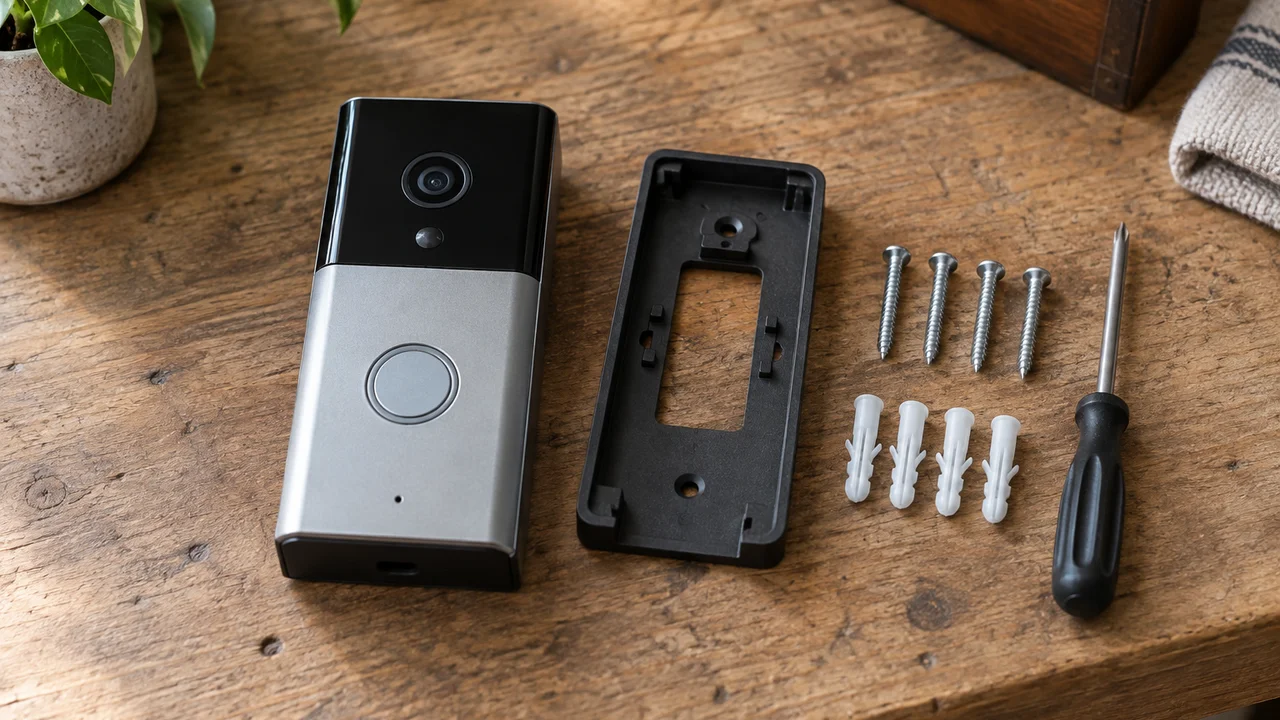
A video doorbell replaces your existing doorbell button with one that has a camera, a microphone, a speaker and (usually) a motion sensor built in. When someone presses it, or walks into its field of view, it sends a notification to your phone and lets you see and talk to them, whether you’re on the couch or on the other side of the world on the NBN at your in-laws’ place. Most record short video clips either to the cloud or to a local storage card, depending on the brand and plan.
The useful bit is genuinely useful. Missed-delivery disputes, the “was that actually a tradie or someone casing the place” question, checking on an elderly parent’s front step, knowing your kid got home from school. We don’t think the core function is oversold. Where it gets complicated is everything downstream of that camera being switched on 24 hours a day.
The subscription trap
Here’s the bit retailers tend to bury: the doorbell itself is often the cheap part. Many popular models will quietly reduce themselves to a glorified buzzer once their free trial period runs out, unless you pay an ongoing fee, typically somewhere in the order of $4 to $15 a month depending on the brand and how much video history you want. Miss that payment and in a lot of cases you lose recorded clip playback, sometimes even basic motion alerts.
That’s a genuinely different buying decision to “this doorbell costs around $200.” It’s closer to “this doorbell costs around $200, plus somewhere between $50 and $150 a year, indefinitely, for as long as you want to actually use the recordings for anything.” For a renter who might move in 18 months, or a pensioner on a fixed budget, that ongoing cost matters more than the sticker price ever does.
Our take: if you’re not going to pay the subscription, buy a model with solid local storage instead of cloud-only recording, and go in understanding exactly what functionality disappears when you decline the upsell. Read the actual product page before you buy, not the box.
Whose footage is it, anyway
This is the part that doesn’t get talked about enough. A doorbell camera pointed at your front door is, almost by physical necessity, also pointed at the public footpath, the street, and often a decent slice of whichever neighbour’s house happens to be opposite or beside yours. You’re not just recording your own property. You’re recording theirs, and recording members of the public who never agreed to any of it.
Australia doesn’t have a single, dedicated law that says “thou shalt not film thy neighbour’s driveway,” which surprises people. Privacy law here is a patchwork: the Office of the Australian Information Commissioner handles privacy complaints mainly against organisations and larger businesses, and individuals filming from their own property for personal, non-business purposes generally sit outside the Privacy Act’s reach. State-based surveillance device laws, which vary, are more about covert audio recording and listening devices than about a doorbell that’s in plain view.
So in practice, there’s rarely a hard legal barrier stopping you from pointing a camera at the street. The barrier is social, and it’s the one most buyers skip straight past: is your neighbour okay with being on camera every time they take the bin out?
Our contrarian take: angle it in, not out
Here’s the bit we’ll actually argue for, because most buying guides won’t: we reckon the default install angle on most video doorbells is wrong. Installers and the apps themselves tend to encourage the widest possible field of view, because a wider shot looks more impressive in the setup wizard and catches more “events.” We’d rather see people deliberately narrow that field of view, even if it means missing the odd parcel thief at the very edge of the frame, so the camera is capturing your porch and your path, not your neighbour’s bedroom window or their car in their own driveway.
Most apps let you draw “activity zones” or privacy masks to exclude parts of the frame from recording and notifications. Almost nobody bothers. It takes five minutes and it’s the single biggest thing you can do to stop your home security purchase turning into a minor neighbourhood dispute. We think it should be a mandatory step in setup, not an optional menu buried three screens deep.
Talking to your neighbours about it
If you’re installing one, the courteous move, and frankly the sensible one, is to mention it to whoever lives next door or across the street before it goes up, particularly if your front door faces theirs directly. Most people are fine with it once they understand the footage is motion-triggered rather than a live stream someone’s watching, and that you’re not about to post clips of them to a community Facebook group.
Speaking of which: if your doorbell does capture a dispute, a break-in attempt, or a genuine safety incident, understand that footage becomes evidence, and evidence has a chain of custody that matters if police get involved. Don’t crop it, don’t edit it, and if you’re asked by officers investigating a break-in, hand over the original file rather than a screen recording of your phone screen. For anything that looks like it might involve a scam or attempted fraud at the door, Scamwatch, run by the ACCC’s Scamwatch service, is the right place to report it, not a local Facebook group, however tempting that is.
Who should actually buy one
We’d sort buyers into three rough groups. Parents juggling school pickups and deliveries get genuine daily value out of the two-way talk feature, mostly for checking who’s at the door before opening it to a stranger. Renters should lean toward battery-powered, no-drilling models that can come off the wall when the lease ends, and should check with the landlord first, because drilling into a rented door frame without approval is a bond fight waiting to happen. Older Australians living alone, or those caring for an older parent, tend to get the most genuine peace-of-mind value, though we’d pair any doorbell purchase for that use case with a plain conversation about what the subscription actually covers, because being talked into a $12-a-month plan by a confident salesperson is its own small problem.
Tradies and small business owners watching a van or a shed are a different case again; for them the motion zones and local storage option matter more than the two-way chat feature, since the goal is evidence after the fact rather than conversation in the moment.
Battery, software and the stuff that actually breaks
Spec sheets love to talk about resolution and field-of-view angles. We care more about three boring things: battery life in real conditions, how long the manufacturer promises software updates, and whether the thing can be repaired or just replaced when it dies.
Battery-powered doorbells in full Australian summer sun, especially north-facing ones in Queensland or the Top End, tend to drain faster than the manufacturer’s lab figures suggest, and recharging means taking the whole unit off the wall, which gets old fast. Hardwired models sidestep that but need an existing doorbell transformer, which older Australian homes sometimes don’t have in a form these devices like.
Software support is the sleeper issue. A doorbell is a small computer glued to your wall, connected to your home network and the internet, indefinitely. If the manufacturer stops pushing security patches, that’s a device with a camera and microphone sitting on your network with known, unfixed vulnerabilities. We’d treat a stated security-update commitment the same way we’d treat it on a phone or laptop, something covered well in our Windows 10 end of support guide for a different category of device with the same underlying problem. Before buying, check how long the brand has actually supported its older models in the real world, not just what the current box promises.
Network and connectivity, the bit installers skip
A video doorbell is only as good as the WiFi signal reaching your front door, and for a lot of Australian homes, especially older brick-veneer houses or anything with a double-brick facade, that’s the weakest spot in the house, not the strongest. If you’ve recently sorted out your home network with a mesh system or you’re considering a WiFi 7 upgrade for your home network, factor the doorbell’s position into that planning rather than bolting it on afterwards and wondering why clips keep dropping out mid-upload.
If your internet connection itself is patchy, whether that’s an ageing NBN connection or you’ve gone down the NBN versus Starlink comparison path for a rural property, understand that a doorbell relying on cloud uploads needs decent, consistent upload speed, not just download speed, to send video promptly. We’ve seen plenty of doorbells that technically “work” but take forty seconds to deliver a notification because the upload link is the bottleneck, by which point whoever was at the door has given up and left.
Our verdict on video doorbells in Australia
We think video doorbells in Australia are, on balance, a sensible buy for most households, but not for the reasons the marketing leans on. The parcel-theft footage that goes viral is the least interesting use case. The actual value is knowing who’s at your door before you open it, and that’s worth the modest hardware cost for most people.
The subscription question deserves a proper budget conversation before purchase, not an afterthought once the trial period lapses and the app starts nagging. And the privacy question deserves five minutes with the activity-zone settings and, ideally, a quick word to whoever lives across the road. It costs nothing and it’s the difference between a sensible security purchase and becoming the house on the street that everyone quietly resents.
Fair dinkum, the tech itself is mature and reliable now. It’s the setup habits around it that still need work.
— Priya Raman, Reviews Editor, Tech Geek
Featured image: AI-generated illustration.