Ask a smart speaker in an Aussie kitchen to add milk to a shopping list and there’s maybe a four-in-five chance it gets it right first go. That’s been our rough experience across all three big ecosystems, and honestly, that’s the whole story in one sentence: these things are good enough to be genuinely useful, and just flaky enough that you’ll swear at them at least once a week. We’ve spent a fair bit of time living with Google, Amazon and Apple’s smart speakers in ordinary households, not demo rooms, and the differences that matter aren’t the ones splashed across the box.
Smart speakers compared on paper look nearly identical. Microphone array, a voice assistant, some kind of speaker driver, a companion app. What actually separates them is how they behave after the novelty wears off, around week three, when you’ve stopped saying “hey” politely and started barking half-sentences at a device sitting near the toaster.
The three ecosystems in plain English
Google’s line runs on Google Assistant (increasingly folded into Gemini-powered features), and it talks to Google Home, Google Calendar, YouTube Music and Android phones with the least friction of the three. Amazon’s Echo range runs Alexa, ties into Amazon Shopping and Audible, and has by far the biggest catalogue of third-party “skills” and compatible smart-home gear. Apple’s HomePod and HomePod mini run Siri and plug into Apple Home, Apple Music and iMessage, but only really shine if every other device in the house has a bitten fruit on it.
None of these are neutral boxes. Each one is a front door into a retailer or a content library, and the assistant’s job, from the company’s point of view, is to keep you inside that ecosystem. Worth remembering before you buy three of them because they were on special.
Sound quality without the spec-sheet nonsense
Manufacturers love to talk about driver size and “room-filling audio”. We’d rather talk about what it sounds like doing the school-holidays playlist at 7am while someone’s making toast.
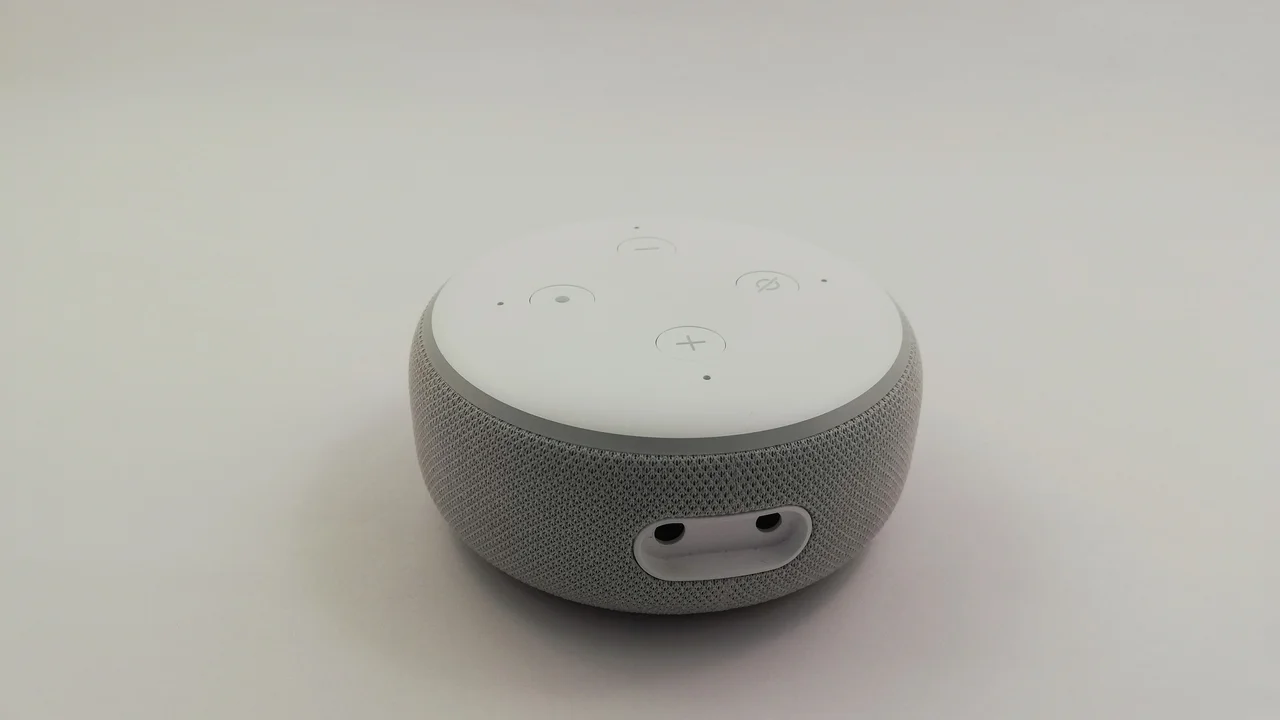
The HomePod mini and the smaller Nest/Echo units are all fine for talk radio, podcasts and background music, nothing more. If you actually care about sound, the full-size HomePod and the larger Echo Studio-class speakers step up noticeably, with proper bass and stereo pairing options. Google’s bigger Nest speakers sit somewhere in the middle, pleasant but rarely the reason you’d choose the ecosystem.
Our take: if music quality is the deciding factor, buy a proper best wireless earbuds australia 2026 guide and a separate good speaker, and treat the smart speaker as the control hub rather than the hi-fi. Trying to make a $150 smart speaker double as your lounge room system is where most people end up disappointed.
Voice recognition and the daily annoyances
This is where people’s loyalty actually gets decided, not in the spec sheet. Alexa still tends to parse casual, run-on requests (“Alexa play that song from the ad with the dog”) better than the other two, probably a side effect of Amazon throwing enormous resources at this for over a decade. Google Assistant is strongest on factual questions and anything tied to your calendar or Gmail, since it’s drawing on the same search engine most of us already use daily. Siri has improved, and Apple has been promising a more capable, context-aware version for a while now, but in our ongoing use it’s still the one most likely to mishear a name or give up with “I don’t understand” on a request the others handle fine.
None of them cope brilliantly with multiple accents in one household, or with a toddler yelling over the top. If you’ve got a mixed-accent family, Google edges ahead in our experience, though it’s not a clean win.
Privacy, smart home ties and who actually owns the data
Every one of these devices is, functionally, a microphone sitting in your kitchen connected to a company that would very much like to know what you buy. That’s not paranoia, it’s the business model. Amazon, Google and Apple all publish privacy controls that let you review or delete voice history, and all three let you mute the microphone with a physical switch, which we’d treat as a non-negotiable feature rather than a nice-to-have.
If privacy is a genuine concern rather than a background worry, Apple’s approach of processing more requests on-device gives it a real edge, and its public documentation is clearer about what stays local versus what goes to a server. For a broader look at how on-device processing is changing across the industry, our piece on local ai vs cloud ai australia 2026 is worth a read before you commit to a whole-home setup. The Office of the Australian Information Commissioner has general guidance on how businesses should handle data collected in the home, including devices like these, through its privacy rights resources, and it’s a reasonable starting point if you want to understand what you’re agreeing to beyond the click-through terms.
On smart home compatibility, the Matter standard has made genuine progress at letting lights, plugs and locks talk to all three ecosystems without picking a side. It’s not perfect yet, firmware updates still occasionally break things, but it’s considerably less locked-in than it was two years ago.
The tradie, the parent and the student: different speakers, different winners
We’d argue the “best” smart speaker question is close to meaningless without knowing who’s asking.
- Parents juggling school pickups, shared calendars and a household Spotify or YouTube Music account tend to get on best with Google, mostly because Google Calendar and Gmail reminders just work without extra setup.
- Tradies and small business owners who want hands-free reminders, timers and shopping lists while they’re covered in sawdust generally find Alexa’s broader skill catalogue and rock-solid timer handling the least frustrating day to day.
- Students and anyone already deep in Apple’s ecosystem, iPhone, Mac, AirPods, get disproportionate value from a HomePod mini mostly because of how it hands off music and calls between devices, something neither rival does as smoothly for Apple hardware.
None of that is about raw assistant intelligence. It’s about which calendar, which shopping list and which music library you already live in.
Repairability, software support and the thing nobody advertises
Here’s our mildly contrarian take: we reckon software support length matters more for smart speakers than for phones, and almost nobody talks about it. A phone you’ll probably replace in three or four years regardless. A smart speaker tends to get wedged into a wall socket and forgotten, and it keeps listening and processing long after most people have stopped thinking about its update cycle.
None of the big three publish a clean, easy-to-find “this model gets updates until X year” commitment the way Google now does for some Pixel phones. That’s a genuine gap. In practice, older Echo and Nest hardware has kept receiving functional updates for six-plus years, which is reassuring, but it’s also not a guarantee, it’s a pattern we’ve observed. None of these devices are meaningfully repairable either; batteries and internals are glued and sealed, so when one dies, it’s landfill or e-waste drop-off, not a battery swap. If repairability genuinely matters to you as a buying criterion, that’s a mark against the whole category, not just one brand.
Worth checking your council’s e-waste collection points before you bin a dead unit, since several contain lithium batteries that shouldn’t go in general rubbish.
Price and what we’d actually buy in Australia right now
Entry-level units from all three sit in a similar band, roughly $60 to $130 depending on sales, with the bigger, better-sounding models running from around $250 up past $400. Bundles and multi-buy deals pop up constantly around EOFY and Black Friday, which, handily, lands around now if you’re reading this in the lead-up to the weekend sales.
Our honest advice: don’t buy three different ecosystems because each one had a good deal on a given day. Mixing Google, Amazon and Apple speakers in one house is doable, Matter has made it more realistic than it used to be, but you’ll end up with three separate apps, three separate voice histories and a household that’s never quite sure which wake word to use in which room. Pick the one that matches the phones and calendars you already use, buy two or three of that brand, and move on with your life.
If you’re also rebuilding your home network to support a houseful of smart devices, it’s worth reading our explainer on wifi 7 in australia what it actually changes before adding yet another always-on gadget to a router that’s already struggling. The Australian Communications and Media Authority maintains general guidance on connected devices and radiocommunications compliance through its official site, useful background if you want to understand what “compliant” actually means on the box.
Our verdict: pick the ecosystem, not the gadget
If we had to put money on one for a typical Australian household with a mix of Android and iPhone users, it’d be Google, mainly because it’s the least pushy about selling you things and the most useful for the boring daily admin that actually justifies owning one of these. Amazon wins on raw smart-home compatibility and skill depth, which suits tinkerers and tradies with sheds full of connected gear. Apple wins decisively, but only, if your household is already all-in on iPhones and Macs.
The spec sheet was never going to settle this one. It comes down to which company already has your calendar, your music and your patience for mishearing “turn off the lights” as “turn on the lights” at eleven at night.
— Priya Raman, Reviews Editor, Tech Geek