Telstra paid the communications regulator $277,200 in September after its own staff skipped required identity checks during fifteen unauthorised SIM swaps, the kind of fraud that’s fed a fair bit of scepticism about switching to eSIM in Australia. It’s a fair worry, but it’s mostly aimed at the wrong target. The weak point is how telcos verify who’s asking for a number transfer, not the eSIM chip itself. Telstra, Optus, Vodafone and most of the big MVNOs now support eSIM on current phones, and for most people switching over is quicker and tidier than waiting on a physical card in the post.
How eSIM in Australia differs from a physical SIM
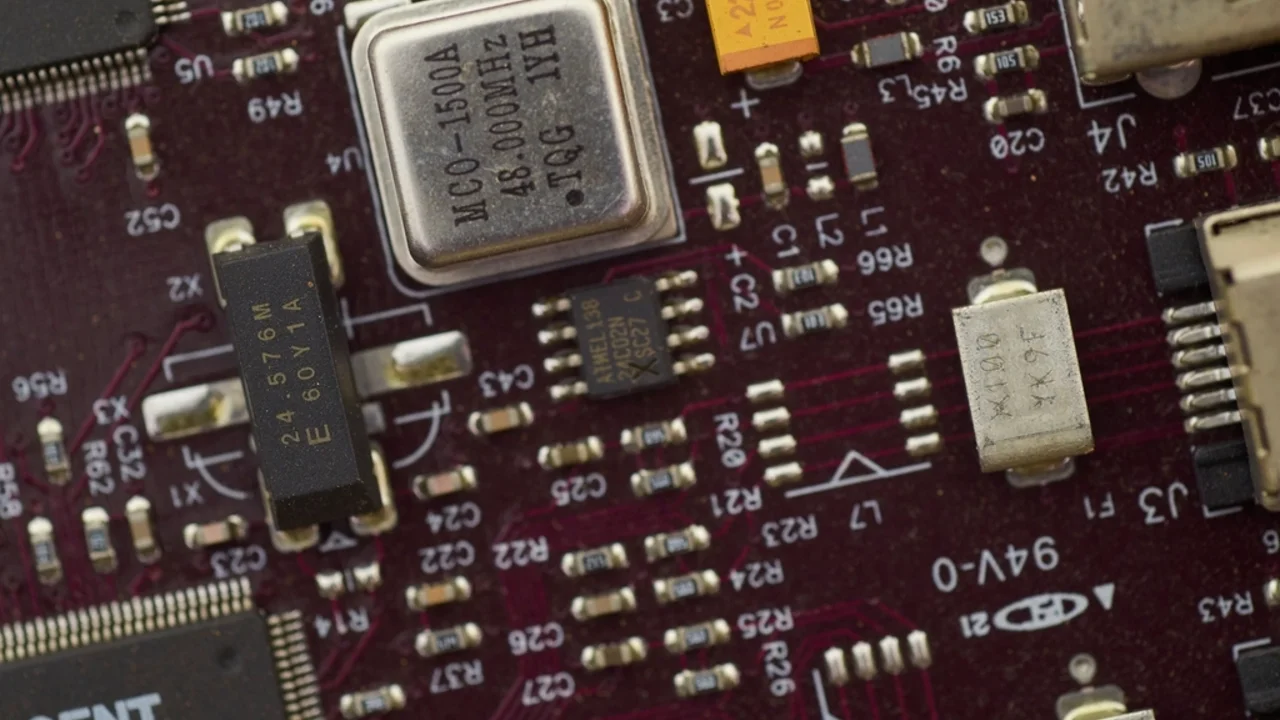
An eSIM is a small programmable chip soldered permanently into the phone rather than a removable card you pop out with a pin. Instead of handing over a plastic SIM, your carrier sends a QR code or a short activation number, and the phone downloads a profile that connects it to the network. The same physical chip can hold several profiles, which is how dual-SIM works without a second card slot: one number for personal use, another for work, or a local data plan layered over your regular Australian number while travelling.
Worth knowing before you assume your phone is ready: in most of the world, including Australia, recent iPhones still ship with a physical nano-SIM tray alongside eSIM support. Only US models have dropped the tray entirely since the iPhone 14. So an Australian iPhone 16 or 17 gives you the choice, it doesn’t force eSIM on you. You can check whether your handset supports eSIM at all by dialling *#06# on most Android phones and looking for an EID number, or checking Settings on an iPhone or iPad.
Carriers have their own reasons for pushing eSIM beyond convenience. There’s no plastic card to manufacture, post or lose in the mail, and a number port that used to take a day waiting on a courier can now happen the moment you tap confirm in an app. That’s good for the telco’s costs as much as it is for you, which is probably why every major provider now nudges new sign-ups toward eSIM by default rather than mentioning it as an option buried in the fine print.
Telstra, Optus and Vodafone: where the big three stand
Telstra covers eSIM on most devices released after 2020, including current iPhone, Pixel and Galaxy ranges. You can activate or transfer an eSIM through the My Telstra app, a QR code, or a six-digit carrier activation number, and number transfers typically land within about four business hours. Scan the QR code carefully though, since Telstra’s codes are single-use and re-scanning too many times can lock the activation for 24 hours.
Optus lists eSIM support from the iPhone 12 series onward (including the SE, third generation), the Galaxy S20 series onward, Pixel 4 onward, and a handful of newer Motorola handsets. There’s no extra charge for choosing eSIM over a physical card either way.
Vodafone, part of TPG Telecom, lets you pick eSIM at checkout online or through the app, with activation usually done inside a few minutes rather than days. Vodafone’s eSIM service also supports NumberSync, which puts your phone number on a cellular smartwatch without a second SIM or plan. If you’re weighing that up alongside a new watch purchase, our smartwatch buying guide covers which models actually take a standalone connection.
The MVNOs have mostly caught up
Budget brands used to lag well behind the big three on eSIM, and a couple still do, but the gap has closed faster than we expected this year. Most MVNOs run entirely on a host network’s infrastructure, Belong on Telstra’s, felix and TPG’s own-brand plans on Vodafone’s, so they’ve generally had to wait for the parent carrier to open eSIM up to resellers before they could offer it themselves. That’s a reasonable technical excuse for the lag, though it doesn’t explain why some brands still make you dig through an app rather than offering it at sign-up the way the big three do.
- Boost Mobile: eSIM is available, but currently only through the Boost app rather than at the point of sale.
- felix: the Vodafone-network, app-only MVNO sets eSIM as the default for new sign-ups.
- amaysim: offers eSIM activation on its compatible plans through its own app.
- Belong: Telstra’s budget brand now supports eSIM across its SIM-only plans, priced from around $34 to $59 a month for 25GB up to 160GB.
If a compatible phone is the sticking point rather than the plan, our mobile phone buyer’s guide is a reasonable place to start, since eSIM support is now common even outside the flagship tier.
Switching your phone over
Once you’ve confirmed your device supports eSIM, the process is fairly short. On an iPhone already on a physical Telstra SIM, go to Settings, select the mobile plan, then Convert to eSIM. On other carriers, or a fresh sign-up, you’ll scan a QR code or enter an activation number through the carrier’s app. In our experience, the whole thing from opening the app to seeing full signal bars takes less than ten minutes once you actually have the right code in front of you.
A few practical traps to avoid. Don’t delete your old physical SIM or eSIM profile until you’ve confirmed the new one is active and taking calls, since a premature deletion can leave you with no service until the carrier sorts it out. Moving to a new phone doesn’t copy your eSIM across automatically the way an iCloud or Google backup does either; you generally need to trigger a transfer through the carrier’s app on both devices, or reissue the eSIM from scratch. Selling or trading in a phone with an active eSIM also means remembering to remove your profile first, something people forget far more often with eSIM than they ever did with a card they could simply pull out.
Travel eSIMs versus your carrier’s roaming pass
Australia’s big three now sell short-term roaming passes rather than charging per megabyte overseas. Telstra’s International Day Pass runs in zones, roughly $5 a day for around 80-plus Zone 1 destinations with 2GB of data and unlimited calls and texts, stepping up to about $10 a day for Zone 2. Optus offers a similar $5-a-day Roam pass on some plans such as Choice Plus, with other postpaid plans paying closer to $10 a day. Vodafone’s roaming also starts from around $5 a day.
Global travel eSIM marketplaces are the alternative: buy a short-term, data-only eSIM for your destination before you fly, running alongside your normal Australian number as a second profile.
Our take: for anything under about three weeks, sticking with your own carrier’s day pass usually beats juggling a separate travel eSIM. You keep the same number the whole trip, which matters when your bank or myGov is texting you one-time codes, and you’re not fiddling with a second profile the night before a flight. A standalone travel eSIM earns its keep on longer trips or when your carrier simply doesn’t cover a destination well.
The eSIM swap scam problem
The scam itself isn’t new, but eSIM makes the mechanics slightly easier for a criminal. A traditional SIM swap needed a physical card to be issued and picked up or posted somewhere; an eSIM only needs a scammer to convince a telco, using your stolen personal details, to push a new profile straight to a device they control. Once your number moves, they intercept the SMS one-time codes banks and email providers rely on, then reset your accounts before you’ve noticed your phone has lost signal.
Australia has had binding rules on this since 30 June 2022, when the Australian Communications and Media Authority’s identity verification determination came into force, requiring telcos to use stronger, multi-factor checks before approving a SIM or eSIM swap. Telstra’s $277,200 penalty this September shows the rule still gets missed in practice: the regulator found staff failed those checks in fifteen unauthorised swaps between January and October 2025, with affected customers reporting a combined $39,500 in losses.
The practical defence is the same regardless of which telco you’re with. Don’t rely on SMS as your only two-factor method for banking or email if the service offers an authenticator app instead, and ask your provider whether it can set a separate porting PIN on your account. We’ve covered the newer scam tactics doing the rounds in more detail if you want the wider picture beyond SIM fraud specifically.
Is eSIM worth switching to now?
For most people with a phone bought since around 2020, yes, and there’s genuinely no downside on cost. It’s faster to activate than waiting for a card in the post, it makes dual-SIM painless, and it’s one less physical thing to lose. We’ve moved several review phones across eSIM this year without a failed activation, and the one time it did go sideways was because an old physical SIM was still listed as the primary line, so sort that out first if you’re switching an existing number.
The one group we’d actually tell to hold off: people who swap handsets often through second-hand trades or marketplace sales. Pulling a physical card and dropping it into the next phone is still simpler than triggering a carrier transfer every time, and it’s harder to accidentally leave an old profile active on a phone you no longer own. For everyone else, the shift away from the plastic card is well underway, and the carriers building for eSIM-first are the ones setting the pace now.
— Priya Raman, mobile and telecommunications writer, Tech Geek
Featured image: Photo: Ivan Radic, CC BY 2.0.