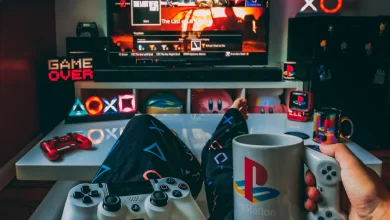
Nan beat my cousin at a co-op game last Christmas and has not let it go since. That’s the thing nobody tells you about co-op games to play with family: half the fun is the bickering afterwards about who dropped the ball, not the game itself. We’ve spent a fair few long weekends testing which titles actually hold a mixed-age lounge room together versus which ones cause someone to put the controller down and go check their phone.
The honest answer is that most “family game night” lists online are recycled from the same five titles, half of which are genuinely tedious if you’ve got a mix of a ten-year-old, a disinterested teenager and a parent who still thinks the left stick steers the camera. So this is less a definitive ranking and more a working list, the kind we’d actually text to a mate asking what to buy before a family trip to the coast over the summer break.
Why local co-op still wins at Christmas
Online co-op is brilliant when everyone’s got their own setup and a decent internet connection. But family gatherings are usually one TV, one lounge room, and someone’s nan on a dining chair pulled in from the kitchen. That’s local co-op territory, and it’s a genre the big console makers keep underestimating.
Nintendo has quietly owned this space for close to a decade. Games built around drop-in, drop-out local co-op, where a player can jump in mid-level without a lobby or a loading screen, are rarer than they should be. If you’ve got a Switch or the newer Nintendo Switch 2 worth it question still rattling around your head before buying one for the household, the honest pitch is that the hardware earns its keep specifically because of this kind of shared-screen gaming, more than any single blockbuster exclusive.
Our contrarian take, and we’ll argue it properly: split-screen is not a dead format, no matter how many developers have dropped it in favour of online-only modes. A shared screen means everyone’s reacting to the same moment at the same time. Online co-op with everyone on a headset in separate rooms is fine, but it’s not the same as four people leaning into one television yelling at the same badly-timed jump.
The classics that still deliver
Overcooked remains the default answer for good reason. Chaotic kitchen management with a timer ticking down turns otherwise calm relatives into people screaming about onions, and it scales from two players right up to four without losing its rhythm. It’s cheap by now too, usually sitting well under $30 in a sale, and the sequel adds enough new mechanics that owning both isn’t redundant.
It Takes Two deserves its reputation, though we’d push back slightly on the idea that it’s purely a “couples game”. We’ve seen a parent and a teenager get through the whole campaign over a few sessions and come out the other side actually talking to each other more, which given how teenagers operate is no small feat. It’s built for exactly two players though, no more, so it’s not the pick if you’ve got a full house.
Mario Kart is the one nobody needs convincing on, but worth saying plainly: the battle mode and the balloon battles get forgotten in favour of just racing, and that’s a mistake. Four-player split-screen Mario Kart with items turned up high is still one of the most reliable ways to get a room of relatives of wildly different skill levels on equal footing, because a well-timed blue shell doesn’t care how good you are.
Games that handle mixed skill levels properly
The real test of a family co-op game isn’t whether it’s fun when everyone’s good at it. It’s whether it stays fun when one player is six and another is sixty-two. This is where a lot of “co-op” games fall over, because they were designed around two reasonably competent adults.
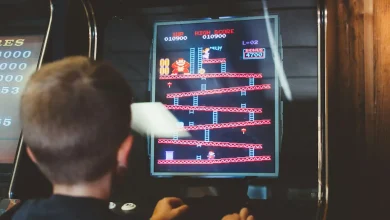
Unravel Two and the various LittleBigPlanet-style platformers handle this reasonably well because dying doesn’t really cost you much, and a weaker player can be carried through a level without feeling like dead weight. Donkey Kong-style co-op platformers, including the recent Donkey Kong Bananza era titles, lean the same way, built so a less experienced player can grab onto a barrel or a partner and get dragged along rather than left behind.
Minecraft, somewhat obviously, remains the most forgiving co-op sandbox going, and we’d argue it’s underrated specifically as a family pick because there’s no real fail state. Nobody’s shouting at a six-year-old for dying, because dying in Minecraft just means walking back to where you were. It also runs on practically everything, which matters more than people admit when the household has a mix of console generations and an ageing gaming PC that someone built off a realistic parts list a few years back.
Frame rates and whether it actually matters here
We write plenty about frame rates on this site, and in competitive shooters or racing games the difference between 30 and 60 frames per second genuinely changes how a game feels to play. For family co-op, we’ll say something that might annoy the hardware purists: it matters less than you’d think.
Overcooked at 30fps on a base console is still objectively fun. Mario Kart on the Switch, which doesn’t chase the frame rate numbers that PC or PlayStation titles do, is still the most-played local co-op game in most Australian households with kids. The fun in these games comes from the social chaos, not the smoothness of the motion. If you’re deciding whether to splash out on a new 4K gaming monitor purely to make family game nights better, we’d honestly save the money. A decent telly with HDMI 2.1 support, properly configured using something like the guide on setting up a TV properly for gaming, will do far more for a shared-screen co-op session than a high refresh monitor nobody but one person is sitting close enough to appreciate.
The Australian pricing reality check
Co-op games age well, which is good news for anyone buying for a family rather than a single hardcore player. Overcooked, Mario Kart 8 Deluxe, and even It Takes Two regularly sit in sales well below their launch prices, often somewhere between $20 and $50 depending on the platform and the time of year. Boxing Day and EOFY sales are genuinely worth waiting for if you’re not in a rush.
Worth flagging too: a lot of these titles have in-game purchases or cosmetic add-ons bolted on, and the rules around how these are classified and sold to Australian consumers aren’t always obvious to parents buying for kids. The Australian Classification Board has tightened guidance on this over the past few years, and it’s genuinely useful background reading before buying anything for a younger relative. We’ve covered the detail in our piece on Australia’s rules on loot boxes and microtransactions, and it’s worth five minutes before you hand over the credit card for a “family bundle” that turns out to be mostly optional extras.
If you’re buying digitally rather than physically, check which store account the purchase sits under. Family sharing works differently across Nintendo, PlayStation and Xbox ecosystems, and more than one household has bought a game twice because nobody realised it was already sitting in a sibling’s library.
What we reckon is overrated, fair dinkum
Here’s the mildly unpopular opinion we’ll actually stand behind: Among Us is not a great family co-op game, despite being recommended on practically every list like this one. It’s a brilliant game among friends who already trust each other and enjoy a bit of social deception. Put it in front of a nine-year-old and a grandparent and it mostly produces confusion and, occasionally, genuine upset when someone gets voted off for no good reason. Social deduction games reward a kind of adult cynicism that doesn’t always translate well across generations sitting on the same couch.
We’d swap it out for something cooperative in the true sense, where everyone’s working toward the same goal rather than quietly working against each other. The difference matters more at a family gathering than in a group of mates who can laugh off being voted out unfairly.
Setting the household up properly
A few practical notes that make more difference than the game choice itself. Controllers matter: if you’ve only got one spare controller and three relatives wanting a turn, the night is going to be shorter and crankier than it needs to be. Budget controllers have genuinely improved, and it’s worth grabbing a couple of extras before the big family get-together rather than discovering the gap mid-session.
Internet matters too, even for local co-op, since most modern titles want to phone home for updates, achievements or day-one patches before they’ll let you play properly. If your household’s connection has been patchy, it’s worth a look at our broader rundown on mesh WiFi systems compared for Australian homes, because nothing kills family game night faster than a forty-minute download queue starting the moment everyone sits down.
And if younger relatives are going to be playing online modes rather than strictly local co-op, it’s worth knowing the current landscape around age-appropriate access. The eSafety Commissioner has clear guidance for parents handling online multiplayer and social features bundled into modern games, and it’s a more useful read than most in-game parental control menus manage to be on their own.
Our actual pick for this summer
If we had to hand one game to a family with a genuinely wide age range and only a single console, it’d still be Mario Kart 8 Deluxe. It’s not flashy, it’s not pushing any technical boundary, and plenty of PC gamers would turn their nose up at a racing game that isn’t chasing ray tracing or ultra-wide support. But it does the one thing that actually matters for this particular brief: it gets everyone playing the same match at the same time, laughing at the same disaster, regardless of whether they’ve been gaming for thirty years or thirty days.
Overcooked 2 is our second pick for genuine chaos, and Minecraft rounds it out for the stretch between Christmas lunch and whenever everyone finally decides to go home. None of them need the latest hardware, none of them demand a big spend, and all three have survived multiple family Christmases in our experience without anyone storming off in a huff. That’s about as strong an endorsement as co-op gaming gets.