Is the Nintendo Switch 2 worth it in Australia now that the console is well past its first birthday? Short answer: for a lot of people, yes, though the picture has shifted since launch. The console arrived here on 5 June 2025 at $699.95, and Nintendo lifted that price to $769.95 from 1 September 2026, pointing to rising memory costs and broader economic pressure. We’ve spent plenty of time with ours since launch day, and the case for buying one in late 2026 looks different to the case Nintendo made back then.
What a Switch 2 actually costs right now
The sticker price is the first thing to get straight. Nintendo’s own price-revision notice confirms the console moved from $699.95 to $769.95 on 1 September 2026, a jump of $70. Nintendo’s explanation cited memory costs, tariff exposure and general economic conditions rather than anything specific to Australia. Interestingly, the original Nintendo Switch console kept its old price through the same revision, which tells you the hike was about the newer hardware’s component costs rather than a blanket increase across the range.
Analysts at Niko Partners had been flagging a Switch 2 price rise for most of 2026, so this wasn’t exactly a surprise to anyone following the console market closely. It does change the maths for anyone who was holding off, though: a $70 jump is real money, and it lands on top of whatever you’ll spend on a second controller, a game or two and, as we’ll get to, a memory card that doesn’t fit your old Switch.
The hardware upgrade over the original Switch
On paper the jump from the original Switch is substantial. The screen is now a 7.9-inch LCD running at 1920×1080 with HDR10 support and variable refresh rate up to 120Hz, according to Nintendo’s own Australian tech specs page. Docked and plugged into a TV, it’ll output up to 4K at 60fps, or drop to 1080p/1440p for 120fps in games that support it. Internal storage is 256GB, up from the meagre 32GB most original Switch owners spent years working around.
We’d argue the screen and dock output matter more day to day than the raw horsepower figures Nintendo doesn’t publish on its consumer spec sheet. Handheld mode is where most Australians actually play, and a sharper, smoother panel is the upgrade you notice within the first ten minutes. Whether the extra grunt matters depends entirely on which games you play, which is really the whole story of this console.
Under the bonnet, most reporting since launch has settled on 12GB of RAM, a meaningful jump that lets developers keep more of the game loaded at once and cuts down on the loading pauses that plagued some original Switch ports. Nintendo doesn’t publish that figure on its own consumer spec sheet, so treat it as well-corroborated rather than officially confirmed, but it lines up with what we’ve seen in how quickly newer titles load compared with the original console.
Game-Key Cards: physical media with a catch
Here’s where we get a bit contrarian. Nintendo now ships some physical cartridges as Game-Key Cards rather than full game cards. As Nintendo’s own Game-Key Card explainer lays out, the cartridge itself doesn’t contain the game. It’s a licence key that triggers a full download, and you still need the physical card in the console to play afterwards. Nintendo’s stated reason is file size: Switch 2 games regularly clear 50GB, well beyond what a cartridge can hold cheaply.
That’s a fair engineering explanation, and we don’t doubt it’s true. But it’s also a card that behaves like a disc while quietly requiring an internet connection and a full download the first time you use it, which isn’t what most people picture when they buy a “physical” game. If you’re buying second-hand or you live somewhere with patchy NBN, check whether a title is a Game-Key Card before you commit. It’s not a dealbreaker, but it’s a meaningfully different product to what physical media used to mean on this platform.
Backwards compatibility and your existing library
The good news is straightforward: your original Switch library carries across. Physical Switch cartridges work in the Switch 2’s cartridge slot, and digital purchases tied to your Nintendo Account redownload on the new hardware. A handful of “Nintendo Switch 2 Edition” upgrades, such as the refreshed take on Breath of the Wild, add higher resolutions and frame rates on top of games you may already own. If you’ve built up a decent library over the years, that continuity is arguably the strongest reason to upgrade rather than switch platforms entirely, and it’s a real point of difference against something like a Windows handheld, which we covered in our handheld gaming PC comparison.
Linking your Nintendo Account before you trade in or sell an old console is worth doing early rather than as an afterthought. Digital purchases follow the account rather than the hardware, so as long as you’ve kept that account current, moving your eShop library to a Switch 2 is mostly a matter of signing in and letting downloads run overnight. Physical carts need no such fuss; they simply slot into the new console’s cartridge reader and play.
microSD Express: the storage headache nobody warned you about
This is the upgrade detail that catches people out. The Switch 2 only accepts microSD Express cards, a newer and considerably faster standard than the microSD cards that worked in the original Switch. Nintendo confirms this plainly on its specs page: old cards simply aren’t compatible, full stop. If you’re moving from an original Switch with a well-stocked memory card, that card is staying in the drawer.
Budget for a new card as part of the purchase rather than an afterthought, because 256GB fills up fast once you’re downloading Game-Key titles at 50GB-plus a pop. We won’t quote a specific price here since retailer pricing shifts constantly, but expect microSD Express to cost noticeably more per gigabyte than the old standard did. If external storage and memory cards are a genuine mystery to you, our portable storage guide covers the broader landscape of what’s worth buying and why.
Battery life in the real world
Nintendo lists battery life at approximately 2 to 6.5 hours, and in our experience that range is honest rather than optimistic marketing. Demanding, graphically heavy games sit at the low end; something like a puzzle game or an older Switch 2 Edition title comfortably stretches toward the top. Screen brightness, online play and docking cycles all move the number around.
Practically, that means the Switch 2 is fine for a train commute or a flight, but it’s not a console you leave unplugged for a full day of travel without a power bank in your bag. We reckon most households will end up leaving it docked overnight out of habit rather than genuine necessity, simply because 6.5 hours doesn’t feel like a lot once you’re used to it.
Charging is via USB-C on either the top or bottom edge, which at least means you can top up mid-session with a phone charger in a pinch, something the original Switch’s fussier charging behaviour didn’t always allow. It’s a small thing, but it matters when you’re relying on the console for a long flight home for Christmas.
The games that actually make it worth owning
Hardware aside, the library is what decides this for most buyers. Mario Kart World launched alongside the console and remains the easiest sell for families. Donkey Kong Bananza, released in July 2025, and Kirby Air Riders, which followed in November 2025, rounded out a genuinely strong first year of exclusives rather than the usual thin launch window. Animal Crossing: New Horizons, Nintendo Switch 2 Edition, landed in January 2026 with features built specifically for the new hardware, which is the kind of upgrade path that makes existing Switch owners feel looked after instead of squeezed.
- Mario Kart World: the system-seller for multiplayer and family use
- Donkey Kong Bananza: a genuine 3D platformer showcase
- Kirby Air Riders: fast, accessible party racing
If your interest is purely in playing games rather than owning hardware, it’s worth at least glancing at streaming options too. We compared the major services in our cloud gaming comparison, and for some households that’s genuinely a cheaper path to the same games without buying a console at all.
Third-party support has also picked up noticeably compared with the original console’s early years, with publishers bringing bigger, more demanding titles across at launch or shortly after rather than years later in a cut-down port. That alone changes the calculation for anyone who splits their time between Nintendo exclusives and everything else.
So, should you buy a Switch 2 before Christmas?
If you’re an original Switch owner with a deep library and you’ve been waiting for a price drop, we don’t think one is coming. Nintendo just raised the price, not lowered it, and nothing in its public statements suggests that reverses any time soon. Buy now if the games list above appeals and your old console is starting to feel its age.
If you’re coming from nothing at all, or you mainly play on a TV rather than handheld, it’s worth weighing whether a cheaper original Switch, a Windows handheld or a cloud subscription suits your habits better before committing $769.95 plus a memory card and games. Our honest take: the console itself is a genuine improvement over the original, but the Game-Key Card situation and the microSD Express requirement mean the true cost of ownership is higher than the headline price suggests. Go in with your eyes open and budget accordingly, and it’s a console we’re happy to keep recommending.
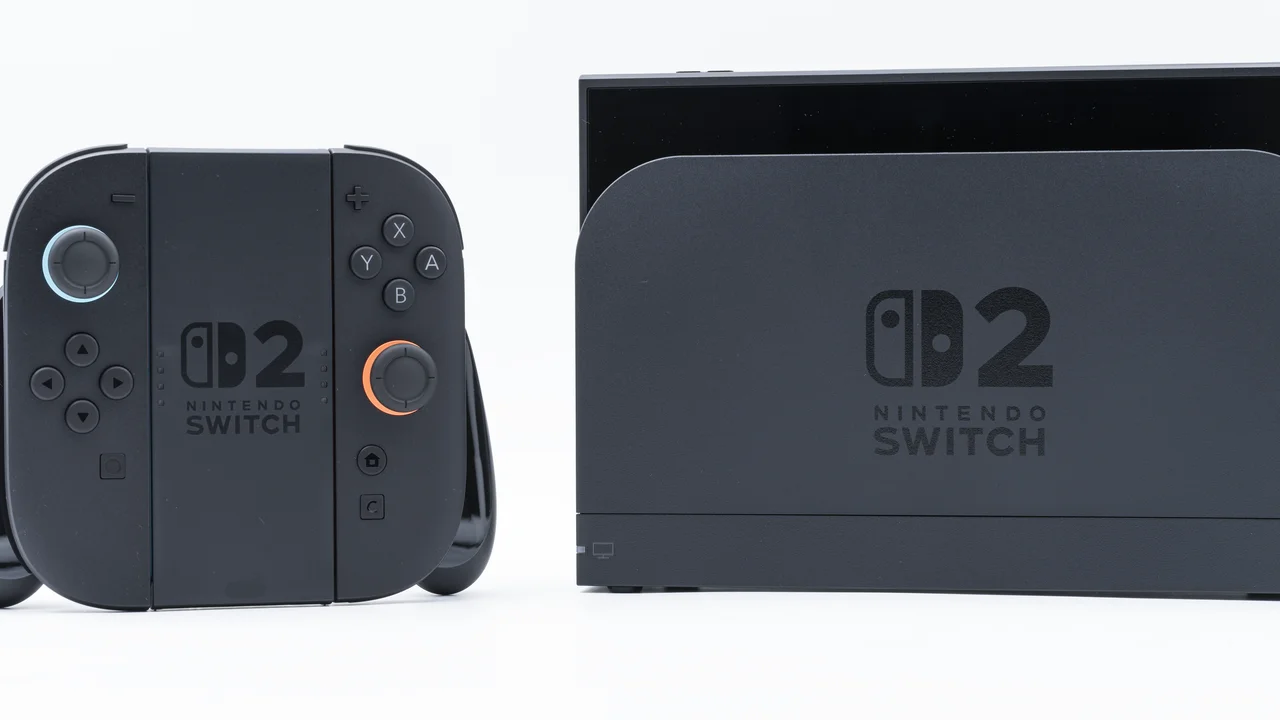
Featured image: Photo: Crisco 1492, CC BY-SA 4.0.