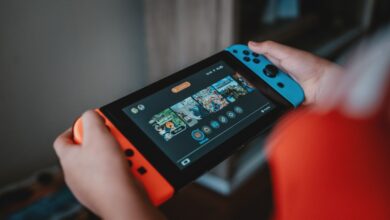
Three different companies want roughly the same amount of your money each month, and they’re each betting you won’t do the maths properly. That’s the honest starting point for any conversation about which gaming subscription best value actually exists in Australia right now, because on paper all three services sound reasonable and in practice they’re wildly different products wearing the same “subscription” label.
We’ve spent a fair amount of time across all three ecosystems over the past year, not as a one-off trial but as the actual way we play. So this isn’t a spec sheet comparison. It’s an argument, with a verdict at the end, and at least one opinion that will annoy someone in a Discord server somewhere.
What each service actually is
Xbox Game Pass is the closest thing gaming has to a Netflix model: pay monthly, get a rotating library of hundreds of games on console and PC, plus day-one access to Microsoft’s own first-party releases. PlayStation Plus is tiered, Essential, Extra and Premium, with the cheapest tier mostly just giving you online multiplayer and a handful of monthly freebies, and the pricier tiers adding a large back-catalogue and some streaming and classic titles. Nintendo Switch Online is the odd one out: a smaller, retro-leaning library built around NES, SNES, Game Boy and N64 classics, plus online play for Switch games, with an “Expansion Pack” tier that adds Nintendo 64 and Sega Genesis titles and a few Nintendo 64 era extras.
None of these are really competing for the same job. Game Pass wants to be your entire games library. PS Plus wants to be a top-up on a console you already own plenty of games for. Switch Online wants, frankly, very little from you beyond letting you play Mario Kart with your cousins.
The price question, in Australian dollars
At the time of writing, Game Pass’s mid and top tiers sit somewhere around $15 to $25 a month depending on which bundle you pick, PlayStation Plus runs from around $14 a month for Essential up past $20 for Premium, and Switch Online is considerably cheaper, often sold as an annual fee working out to a few dollars a month, with the Expansion Pack tier costing more per year but still landing well under what a single new game costs.
Treat all of these as approximate. Prices move, regional bundling changes, and the exact figure on your bank statement will depend on whether you’re paying monthly or annually, and whether you’ve been grandfathered into an older tier. The pattern that matters is the relative gap: Switch Online is a bargain by any measure, Game Pass asks for the most but gives the most back if you actually use it, and PS Plus sits in the middle looking slightly unsure of what it wants to be.
The library argument nobody wins cleanly
Here’s where we’ll push back on the conventional wisdom a bit. The received opinion online is that Game Pass is unambiguously the best deal in gaming, full stop. We don’t think that’s quite right, and we’ve argued about it in the office more than once.
Game Pass’s library is enormous, but a lot of it is filler you’ll install, play for forty minutes, and never open again. That’s not nothing, there’s real discovery value in being able to try a strange indie game with zero financial risk, and we’ve found genuinely great smaller titles that way we’d never have paid full price for blind. But if you mostly want to play two or three big releases a year and finish them, Game Pass’s subscription model works against you in a specific way: games often leave the service, your save data access depends on an active subscription, and you’re essentially renting rather than owning.
PlayStation Plus Extra and Premium have a similar issue but a smaller library, which actually makes it easier to find things worth playing rather than scrolling for twenty minutes. Switch Online sidesteps the whole debate, because nobody is subscribing to it for the current-generation line-up. You’re paying for online multiplayer and a nostalgia trip through old Mario and Zelda titles, and it does that one job at a very fair price.
Day-one releases change the maths entirely
If you’re someone who buys every major Xbox first-party release on launch day, Game Pass essentially pays for itself immediately. A single new release at full price can cost more than several months of the subscription, so the value equation collapses in Game Pass’s favour the moment you’d have bought that game anyway. This is the strongest argument for the service and it’s not a marginal one.
PlayStation doesn’t run the same playbook. Sony’s big first-party titles, the God of War and Spider-Man scale releases, generally don’t land on PS Plus day one, which is the single biggest structural difference between the two ecosystems. You’re paying PS Plus for extras around the edges, not for the flagship experience, and Sony has been fairly consistent about keeping it that way.
Nintendo doesn’t really play this game at all. New Zelda and Mario titles are full-price purchases regardless of your Switch Online status, and we don’t expect that to change. If you were hoping Switch Online would eventually become a Game Pass equivalent for new Nintendo releases, we wouldn’t hold your breath.
Multiplayer access and the fine print that annoys everyone
All three platforms require some form of paid subscription just to play online multiplayer on console, which remains one of the more annoying facts in modern gaming, PC players don’t deal with this at all. It’s worth remembering when you’re doing the value sums: even if you never touch a single downloaded game from any of these services, you’re often paying simply for the privilege of playing Call of Duty or Fortnite’s multiplayer modes with friends on console.
That changes the calculation for a lot of households. If your teenager only wants to play online shooters with mates from school, the cheapest tier of whichever platform they’re on, PS Plus Essential or base Switch Online, might be all that’s needed, and spending more for a bigger library is money down the drain if nobody in the house has time to explore it.
PC players get a genuinely different deal
This is where Microsoft pulls ahead in a way that doesn’t get talked about enough. Game Pass Ultimate includes PC Game Pass, which brings day-one Xbox releases to Windows alongside a large separate library of PC titles, and if you’ve already put together a realistic budget gaming PC build, that single subscription effectively becomes your console and PC library at once. Neither Sony nor Nintendo has a comparable offer, because neither makes PC hardware part of its business the way Microsoft does with Windows.
If you’re deciding between upgrading hardware or paying for a service, it’s also worth checking how your current machine compares against the newer silicon on the market, our rundown of Apple Silicon vs Intel vs AMD is aimed more at general computing than gaming specifically, but the processor generation gap still matters for frame rates in demanding titles.
Our mildly contrarian take
Here’s the opinion we’ll actually defend: for most ordinary Australian households, Nintendo Switch Online at its base tier is the best value of the three, not because its library is the biggest, it’s clearly not, but because it’s the only one of the three that doesn’t quietly nudge you toward spending more than you intended. Game Pass and PS Plus both use tiered pricing designed to make the middle tier look like the sensible compromise, classic supermarket “decoy pricing” territory, and plenty of subscribers end up paying for a tier with features they never touch.
Switch Online doesn’t really have that trap. You pay a small amount, you get online play and a nostalgic library, and the upsell to Expansion Pack is optional and clearly priced rather than framed as the “obvious” choice. It won’t suit someone chasing the newest blockbuster shooter, but as a baseline subscription that doesn’t try to extract more from you than it needs to, it’s refreshingly honest.
Our pick for gaming subscription best value
If you own an Xbox or a gaming PC and buy a few big releases a year, Game Pass Ultimate is close to a no-brainer, the day-one access alone usually covers its cost. If you’re on PlayStation and mostly want online multiplayer plus the occasional back-catalogue game, stick with Essential or Extra rather than paying for Premium’s streaming extras most people barely use. And if your household’s gaming is mostly social, co-op Mario Kart sessions, revisiting old Zelda games, playing with kids or cousins, Switch Online’s base tier is genuinely hard to beat on price.
None of these subscriptions are compulsory, and cancelling one for a few months when you’re between big releases is a perfectly sensible way to use them, we do this ourselves. Treat them more like a tap you turn on and off than a permanent bill, and the value equation gets a lot friendlier. For broader buying advice around building or upgrading the rig these games run on, our guide to where to actually save money on laptops covers some of the same “don’t overpay for tiers you won’t use” thinking that applies here too.
If you want a second opinion on platform value more broadly, Choice’s independent consumer guidance and the ACCC’s consumer rights information are both useful starting points for understanding subscription cancellation rights in Australia, since all three of these services are ongoing contracts subject to the same consumer law protections as any other subscription. The eSafety Commissioner’s guidance is also worth a look if you’re setting any of these services up for a younger player in the house, particularly around online multiplayer interactions.
Featured image: AI-generated illustration.