A reader emailed us last week asking a simple question that turns out to have no simple answer: she’s 34, working in logistics in Dandenong, and wants to know which programming language to learn first before she commits to an evening course. Every forum she’d read gave her a different answer, several of them quite confidently wrong. We reckon that confusion is the actual story here, not the languages themselves.
Our take, after watching this debate cycle through roughly the same arguments for two decades, is that the “best first language” question is mostly a proxy for a different question: what do you actually want to build, and how much friction can you tolerate before you give up? Get that right and the language choice becomes almost incidental.
Why the question is badly framed
Most “learn to code” content treats programming languages like diets: pick the right one and transformation follows. It doesn’t work that way. A language is a tool for telling a computer what to do, and most mainstream languages can eventually do most things. The differences that matter for a beginner are not raw capability, they’re how much ceremony stands between you and seeing something work.
Python became the default recommendation in most university first-year units and TAFE short courses for exactly this reason: you can write a working, useful program in three lines. JavaScript’s pitch is different, it runs in every browser already installed on every computer, so there’s zero setup for a first “hello world”. Both are legitimate starting points. The argument about which is “better” is mostly tribalism dressed up as pedagogy.
Verdict: the language debate online is louder than it is useful.

Python: the safe default, and why that’s not an insult
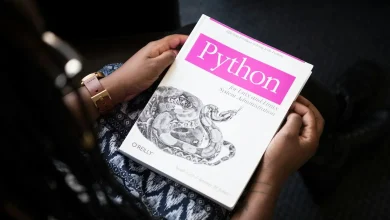
Python reads close to plain English, which matters more than it sounds like it should when you’re starting out and every error message feels personal. It’s also the language most associated with data analysis, automation and the current wave of AI tooling, which means a beginner who learns Python picks up transferable skills if they later want to poke at machine learning models or just automate a boring spreadsheet task at work.
The downside is that Python can make you lazy about things like data types and memory, concepts that matter more once you move to other languages. Some computer science educators argue this creates gaps later. We think that’s a reasonable trade for someone who just wants to get something running in their first fortnight rather than their third month.
It’s also worth saying plainly: Python is not the language of flashy app interfaces. If your actual goal is building an iPhone app or a slick website, Python will teach you to think like a programmer, but you’ll switch languages anyway once you get there.
JavaScript: the pragmatic, slightly messier choice
JavaScript runs in every web browser, Chrome, Safari, Firefox, Edge, without installing anything. For someone who wants to build a website, or a simple web app, there’s a directness to JavaScript that Python can’t match: open a text file, write some code, open it in a browser, see it work immediately.
The trade-off is that JavaScript has accumulated decades of quirks, inconsistent behaviour and a sprawling ecosystem of frameworks (React, Vue, and others) that beginners get pushed toward far too early by tutorials chasing job-market relevance. Learn plain JavaScript first. The frameworks can wait, and most of them will look different again in three years anyway, which is its own quiet argument against chasing whatever’s trendy this month.
Verdict: good if your end goal is visibly on a screen in a browser; frustrating if you want tidy, predictable rules.
The mildly contrarian pick: SQL, not a “real” language at all
Here’s where we’ll push back on the usual advice. If someone’s main goal is employability rather than becoming a software engineer, we’d argue the first thing worth learning properly isn’t Python or JavaScript at all, it’s SQL, the language used to query databases.
SQL doesn’t get included in “first language” lists because it’s not general-purpose; you can’t build an app with it. But across logistics, retail, marketing, finance and government roles in Australia, the ability to pull your own numbers out of a database rather than waiting on an analyst is a genuinely marketable skill, and it takes a fraction of the time to become competent at compared with Python or JavaScript. We’ve watched plenty of career-changers spend four months on Python courses and come out able to build nothing useful for their actual job, when two weeks of SQL would have changed their Tuesday mornings immediately.
This isn’t an argument against learning a proper programming language eventually. It’s an argument against assuming the “serious” languages are automatically the most useful starting point for every goal.
Verdict: unfashionable, underrated, and often more useful than people expect in year one.
What Australian courses and employers are actually teaching
TAFE NSW, TAFE Queensland and the various state training providers have mostly standardised their introductory programming units around Python, partly because it’s free, cross-platform and used in VCE and HSC computing syllabuses already, so students arrive with some familiarity. University first-year computer science units are more varied; some still open with Java or C, on the theory that the extra discipline those languages demand builds better habits.
On the employer side, job listings on SEEK for “junior developer” roles in Melbourne, Sydney and Brisbane skew heavily toward JavaScript and its frameworks, reflecting how much of the local tech job market is web and app development rather than systems programming. That’s worth knowing if the end goal is paid work rather than a hobby, though we’d caution against choosing a first language purely by scanning job ads, since the skills that get you hired at 25 are rarely the same ones that mattered when you were learning to think like a programmer at 20.
The complication nobody mentioned five years ago
AI coding assistants have changed what “learning to code” even means, and we don’t think the industry has fully reckoned with it yet. Tools built into modern code editors can now write entire functions from a plain-English description, which raises a fair question: does it matter which language you learn first if an AI assistant can translate your intent into syntax anyway?
Our view, and we’ll hold it loosely, is that it matters more, not less. An assistant that writes code you can’t read is a liability, not a shortcut, because you won’t know when it’s wrong. Readers who want the fuller picture of what these tools are actually good and bad at should look at our rundown of AI tools for Australian students, which covers the line between useful assistance and outsourcing your own understanding. The historical echo here is spreadsheets in the 1980s: Lotus 1-2-3 didn’t make accountants redundant, it made basic numeracy in spreadsheet logic a baseline expectation. AI coding tools look set to do something similar to basic programming literacy rather than replacing it outright.
Verdict: learn to read code before you lean on something that writes it for you.
Getting set up without spending money you don’t need to
None of the mainstream first languages require paid software. Python installs free from python.org‘s official site, and a browser is already sitting on every laptop for JavaScript. Free, well-regarded starting points include the Python documentation’s own beginner’s guide and the Mozilla Developer Network’s JavaScript tutorials, both maintained by organisations with no product to sell you afterwards, which is more than can be said for a lot of paid “bootcamp” marketing. For broader digital literacy around career skills, the Department of Education’s skills resources are also a reasonable, unbiased starting point for adults considering a training pathway.
A cheap secondhand laptop is genuinely fine for this; none of these languages need serious processing power to learn on. If you’re assembling a budget setup for study and want more grunt for later gaming or video work too, our realistic budget PC build guide is a reasonable reference point for what specs actually matter versus marketing noise. And if part of your motivation is a career pivot into IT more broadly, it’s worth reading around adjacent skills too, since a lot of entry-level tech roles now expect comfort with basics like two-factor authentication methods and general security hygiene, not just the ability to write code.
So which one should you actually pick
If the goal is general programming literacy with the least friction and the most relevance to current AI and data work, start with Python. If the goal is visible, shareable projects, a personal website, a small web app, start with JavaScript and resist the framework rabbit hole for the first few months. If the goal is a practical skill that changes your day job within weeks rather than your career within years, don’t discount SQL just because nobody puts it on the glamorous lists.
What we wouldn’t do is agonise over the decision for another month while reading forum arguments. Every one of these languages has taught millions of people to think computationally, and the switching cost between them, once you understand core concepts like loops, variables and conditionals, is smaller than beginners fear. The language is a doorway, not a destination. Pick one, open it, and see what’s actually on the other side before deciding whether you like the room enough to redecorate.