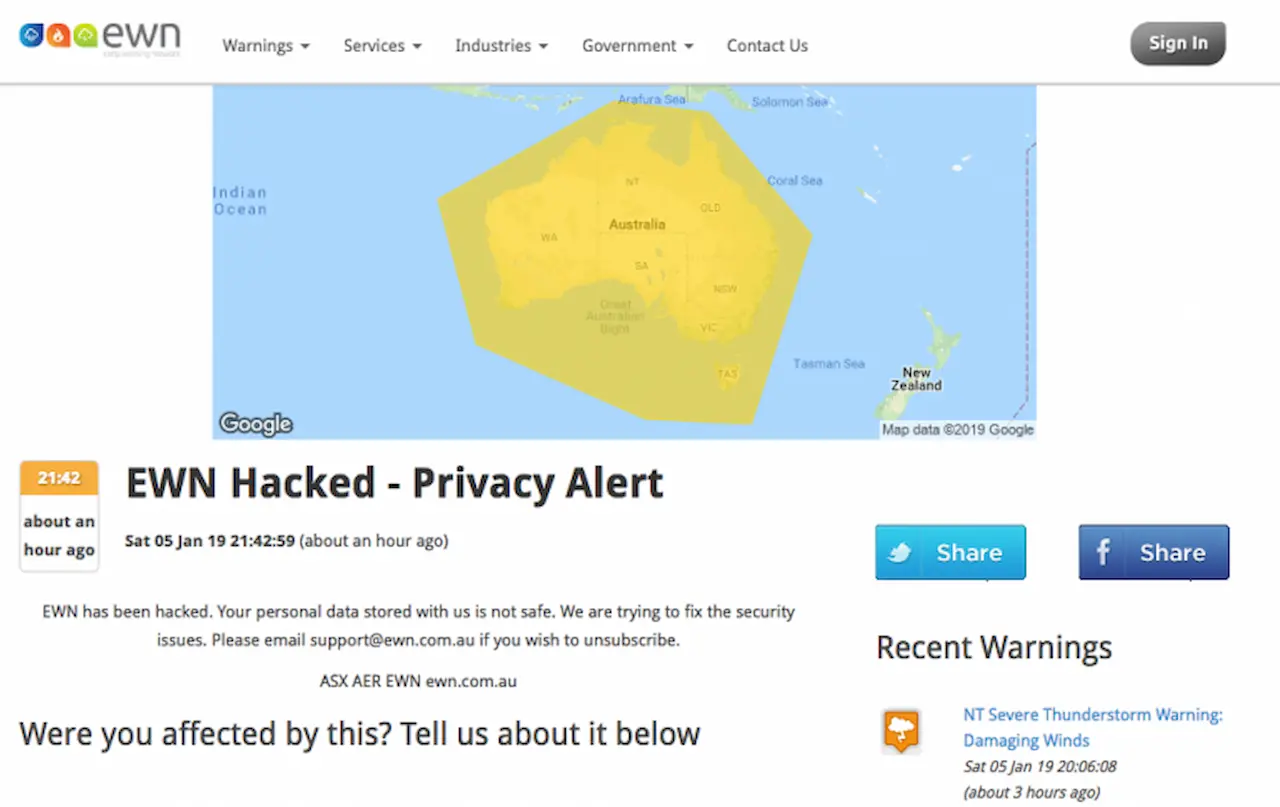
Australia’s Early Warning Network Breach has raised serious questions about privacy and security. Both government agencies and the general public use the alert system, which is one of the most reliable sources of emergency information for the country. It sends out urgent alerts in the event of extreme weather, natural disasters and other threats. This helps citizens to make quick decisions and protect their family and property. Unauthorised messages that warned users their data wasn’t safe caused confusion and widespread concern in Australia.
This breach has also shown how vulnerable services can be when cybercriminals gain entry to sensitive systems. Many Australians were confused and concerned that the Early Warning Network, a service backed by the government, could be compromised. The incident raised concerns about the security of critical infrastructure. The breach, despite the rapid response of EWN and the authorities, highlights serious gaps in digital safety. It also shows that stronger cybersecurity measures are urgently needed to protect national services as well as the personal data and information of citizens.
The Breach of Australian National Security
Early Warning Network is a vital part of public safety in Australia. The Early Warning Network alerts residents of emergencies like severe weather, flooding, and other threats. Residents can receive timely alerts on dangerous conditions from many local councils. Multiple government agencies, at local, state and federal levels, also use this service. This is why the breach has been categorised as both a cybersecurity issue and a national concern.
EWN assured the public in the hours that followed the breach that no personal data had been compromised. According to EWN, only basic information, such as address details, could have been accessed. The company clarified that only “white page” information, such as basic address details, could have been accessed. This helped to calm public concerns but did not remove questions about how login credentials had been obtained. Experts believe that a targeted phishing campaign may have enabled the hacker steal login credentials from an employee.
What happened during EWN’s breach?
Unauthorised persons accessed the Early Warning Alert Network in the evening of 5 January and sent an alert to thousands of Australians. The message stated: “EWN has been hacked.” You are not protected. The hacker sent the message “Trying to fix security problems” and included an email address as well as instructions on how to unsubscribe. The alert was sent through various channels, including texts, emails and landlines. This caused widespread concern throughout the country.
EWN responded quickly by posting a message to its social media accounts confirming the incident. The staff explained that around 9:30 pm AEDT, the system had been accessed in an illegal manner. They were able shut down the system quickly to stop the spread of the message. EWN said that despite the breach, the majority of their users were not affected.
The attack affected only a small part of the database, but it did impact several government agencies. However, not all users had their data compromised. The incident exposed vulnerabilities in the system and raised serious questions about the security measures for national emergency communications services.

How EWN Responded to the Breach?
EWN immediately released a statement to explain the incident and the steps taken to resolve it. The company confirmed staff identified the breach quickly and shut down the alert system in order to stop the message spreading. The rapid response reduced the impact of the alert and the number of users who received it. EWN confirmed that they are also working closely with cybersecurity experts and police to investigate the breach. They will determine how it was accessed and work to prevent similar incidents in future.
EWN said that although the attack only affected a small part of their database, the impact was significant as the warning seemed to have come from a national service. Citizens who depend on EWN to provide accurate emergency information were concerned. The breach revealed a major weakness in security: the sharing of login credentials. Multiple staff members using the same login credentials makes it difficult to track the users and increases the likelihood of misuse. This incident shows the need for better access controls, personal logins and improved cybersecurity to protect vital public safety services.
How can we prevent future breaches?
The EWN hack shows that passwords are not enough to secure sensitive systems. Even the strongest of passwords can still be compromised by phishing, malicious software, or credential theft. It is for this reason that organisations need to adopt stronger authentication methods. This is especially true of systems that manage information about public safety. Two-factor authentication (2FA), which requires users to confirm their identities using a secondary method such as a text message code or an authentication application, adds a layer of security. It is much more difficult for hackers to gain access, even if they have a password.
Organisations must also improve their staff training and security awareness. Employees should be more prepared to recognise suspicious messages and not click on links that are harmful if the breach was caused as a result of a targeted phishing campaign. Regular cybersecurity training reduces the risk of credential theft. Password managers are also useful when multiple users require access to a system. Password managers enable teams to securely share login credentials without disclosing the password. This reduces the risk of unauthorised access. These measures, when combined, can significantly strengthen security and prevent future breaches.

The Importance of the Early Warning Network for Australians
Australia’s extreme weather is well-known worldwide, from bushfires to cyclones and floods. Early Warning Networks are essential for keeping communities informed and safe during extreme weather events. The Early Warning Network provides timely alerts to help residents prepare for sudden weather changes, avoid dangerous zones, and make quick decisions to protect their families. The system is an essential part of life in many areas, particularly during disaster season.
Local councils and emergency service agencies rely heavily upon the Early Warning Network for urgent alerts about flood releases, severe weather warnings, or emergency evacuations. The messages are delivered via multiple channels such as email, text and landline phone calls to ensure that the information is received even if a single method fails. The network is a lifeline for residents in areas that are prone to natural disasters. It helps them stay informed and prepared. Communities would be unable to respond to emergencies quickly and effectively without such a system.
Recent breaches have raised serious concerns about trustworthiness and reliability. The Early Warning Network is a vital service that provides Australians with accurate and timely alerts, which could save lives. This incident may lead some Australians to question the security of the Early Warning Network in the future. EWN must improve its communication with users and strengthen its cybersecurity measures to restore trust. The network can only regain trust by showing that it is protected and accountable.
Rebuilding Trust and Strengthening Security
The hacking of the Early Warning Alert Network highlighted how important it is that public services maintain strong cybersecurity. The quick response of EWN helped to prevent further damage. However, the incident still highlights the importance of proactive security measures. The service is investigating the breach and working with police to prevent future incidents.
The EWN is much more than a simple notification system for Australians. The EWN is an important part of keeping communities safe in times of emergency. This breach is a stark reminder that critical infrastructures must also be protected from modern cyber threats. EWN must demonstrate greater security and transparency to gain public trust.